
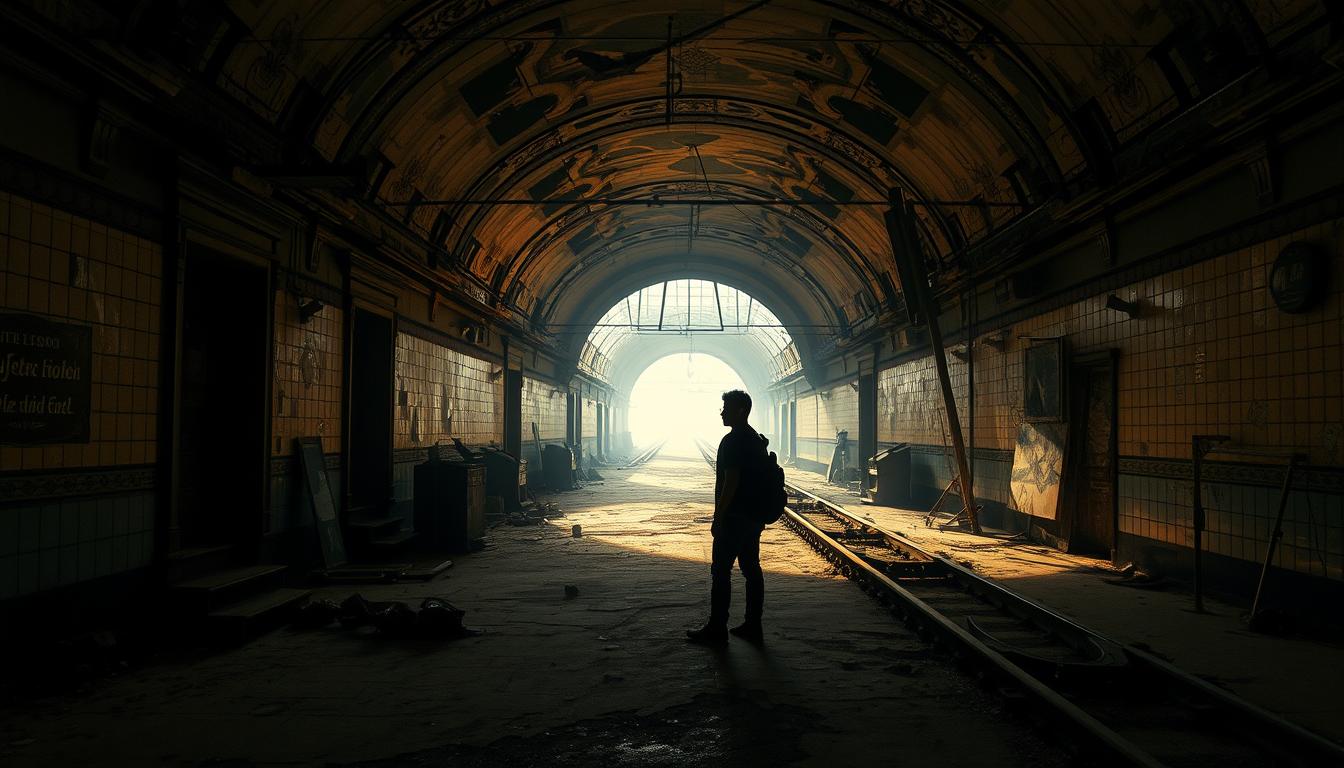
I had a habit of watching the tiles blur from my seat on the madrid metro. Once, between Bilbao and Iglesia, a quiet platform flashed by and I felt like I had found a secret from another era.
I learned this stop first opened in 1919 on Line 1 and later closed on May 22, 1966 because the short curved platform could not be extended. Decades later, a restoration from 2006 to 2008 turned it into Andén Cero, a museum-quality space that preserves ticket booths, turnstiles, and colorful tiled ads.
I visited in the late morning, timing my a.m. arrival to avoid crowds. The modest entrance on Plaza de Chamberí invites the public into a real time capsule that links the metro system to the wider history madrid has lived through.
Key Takeaways
- I spotted the hidden stop on a routine ride along Line 1 and was hooked.
- Estación Chamberí opened in 1919, closed in 1966, and reopened as Andén Cero in 2008.
- The site functions as a museum that showcases early subway design and city history.
- Entry is free but online booking is recommended; it’s a short walk from Bilbao or Iglesia.
- Visiting a.m. or p.m. at off-peak times helps you enjoy the restored platform with fewer people.
Stepping into Andén 0: how I found Madrid’s “ghost” metro stop
On a crowded morning, a brief flash of tiled color between stops made me pull the cord and investigate. I followed that flicker on the metro line until I got off and walked back, drawn by a memory I had seen for years.
A flash between Bilbao and Iglesia on Line 1 that pulled me back in time
The old platform appears as a quick glimpse between Bilbao and Iglesia. That flash sent me on a short walk to the discreet door where Andén Cero hides below the street.
First impressions: ticket office, creaky turnstiles, and tiled advertisements
I spiraled down a modern staircase and found a restored ticket window and wonderfully creaky turnstiles. Vintage maps and bright ceramic advertisements lined the corridors, and the tiles gleamed under old vault lights.
On the platform: glass barrier, rumbling trains, and passengers peering in every few minutes
I watched a 20-minute film in the small theater, then moved toward the platform. A clear glass barrier protects visitors while modern trains thunder past every minutes.
“Standing at the glass, I realized riders were as curious about me as I was about them.”
Andén Cero makes the subway feel like a time machine. People slip between rooms, listen to the hush, and watch trains carve light across the curved walls. The entrance is a short walk from Bilbao or Iglesia, and the whole visit folds past and present into one quiet hour.
From 1919 to 2008: the history Madrid Metro forgot—and restored
I’ve long been drawn to how old platforms keep the city’s private stories in their tiles. The opening in 1919 tied Line 1 between Cuatro Caminos and Puerta del Sol and marked the start of a new transit era.
Opening days on Line 1
I traced the first chapter to 1919, when this stop became part of the growing system. It felt like a proud part of the city’s early history.
War-time refuge
During the Civil War, the underground became a shelter. Families sheltered there while diesel engines in the tunnels helped power essential services for the city.
Why the platform closed in 1966
A 1960s modernization required 90-meter platforms for six-car trains. The curved, sloped, and short platform sat too close to Bilbao and Iglesia, so it closed on May 22, 1966.
Andén 0 rebirth
Interest resurged after the film Barrio, and a careful restoration began in 2006. In 2008 Andén Cero opened, showing Antonio Palacios’s Paris-inspired white and cobalt ceramic work and bright tiled ads.
“Each tile and panel reads like a page in the system’s own diary.”
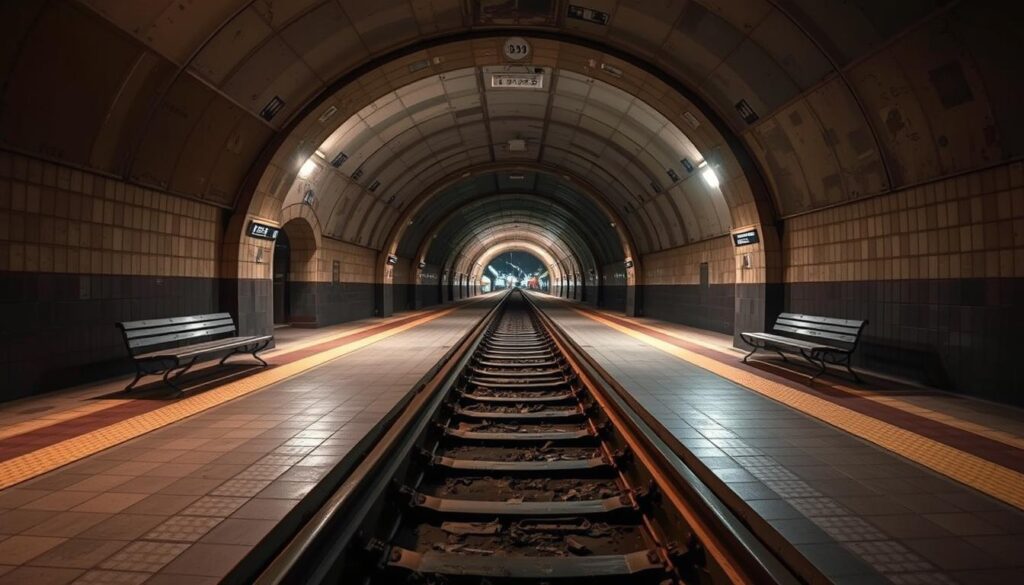
| Year | Event | What visitors see today |
|---|---|---|
| 1919 | Line 1 opening (Cuatro Caminos–Puerta del Sol) | Historic platform design, original tiles |
| 1936–39 | Civil War: refuge and diesel use | Stories of wartime shelter, audiovisuals |
| 1966 | Closure on May 22 | Bricked entrances preserved artifacts |
| 2006–2008 | Restoration and Andén Cero opening | Restored ticket booths, ceramic ads, films |
For more curious readers, this account ties into other local tales, like the phantom train of Chamberí, which helped renew public interest in the site.
Visiting the suburban Madrid ghost station today
From Bilbao I climbed Calle de Luchana and reached the low-key entrance on Plaza de Chamberí. It sits a short walk from Line 1, and the route from Iglesia is just as simple—head south on Calle de Santa Engracia for a few minutes.
Where to go
The modern doorway opens onto a small lobby that leads down to Andén Cero. I found clear signs pointing the way from Bilbao or Iglesia, so getting there by metro was straightforward.
Practicalities and timing
Entry is free to the public, but a “one person out, one person in” policy often creates a line. Arrive close to 11:00 a.m. on weekdays or 10:00 a.m. on weekends to save minutes of waiting.
- Hours: Tue–Fri 11:00 a.m. to 7:00 p.m.; weekends & holidays 10:00 a.m. to 2:00 p.m.; closed Mondays.
- Grab a free ticket if needed and move down with other visitors at an easy pace.
- A 20-minute film loops inside; then you can watch a train slip by behind glass above the tracks.
I noticed staff manage the flow at the entrance, giving friendly tips about the best a.m. and p.m. windows. The mix of museum calm and the rumble from the tracks makes the visit feel alive while keeping people comfortable.
Conclusion
The moment I stood on the platform, the past and present seemed to meet in the same narrow curve. Andén Cero keeps Antonio Palacios’s 1919 design alive with tiled advertisements while modern trains still thunder behind glass.
As a museum and as a working part of the metro system, the place holds years of history in one tidy stop. Estación Chamberí and chamberí station feel like a living memory that links a single line to the wider city.
I left convinced this was more than nostalgia: visitors can hear trains, watch lights streak across a tile, and in a few minutes feel pulled back time. If you value design and history, Andén Cero rewards a short descent with a clear lesson about how stations keep the system’s pulse alive.
Lascia un commento